Profits feel like free money. And that may be a problem


Keytrade Bank
keytradebank.be
August 19, 2026
3 minutes to read
Is your portfolio in the black? Congratulations! But now really is the time to be careful. Nothing to do with the market, but rather what's inside your head. Because profits feel like free money, and we like to have a flutter with them.
Despite the wild roller coaster ride, the first half of 2026 was one for the record books for investors. The global equity markets rose by over 10% (source ). Worries about inflation, the conflict with Iran, doubts about AI and the threat of a new round of import tariffs: all of the above put a damper on our spirits. But no matter what happened, the stock market eventually showered patient investors with profits.
On the one hand, congratulations on keeping a cool head and your money invested. On the other hand, right now you need to be vigilant. Not just because nothing keeps growing forever, but above all because of the effect profits have on our brains.
Gambling with free money
A 1990 study by behavioural economist Richard Thaler (which later won him the Nobel Prize) and psychologist Eric Johnson shows that people are much more likely to be inclined to take risks after pocketing a win (source ). The same amount feels completely different depending on how you acquired it.
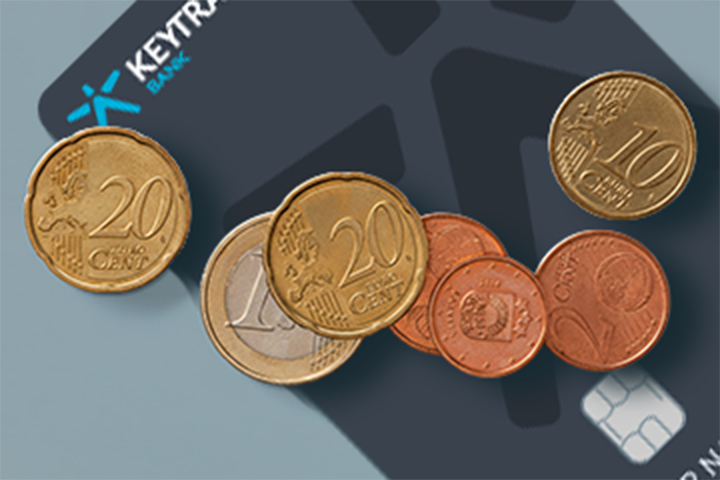
The researchers called the phenomenon the "house money effect", using the casino jargon for winnings that you collect from "the house". Anyone who wins 500 euros at a roulette table then starts playing more loosely and riskily than someone who sits down with 500 euros taken from their savings. The winnings feels like the casino's money, not your own. Losing it is less painful: until the profits have dwindled to nothing, our brain will record any loss as “a bit less profit” rather than a real loss. This is the case even if it is the exact same amount of euros in the end.
People tend to allocate money to separate mental pots. Profit on the stock market often ends up in the "free money" pot rather than in the "personal assets" pot. Large numbers of investors fall into this trap. After a long bull market, most portfolios are sitting on attractive gains. There is a great temptation to think: I'm still playing with winnings, so why not just risk one more bet? A leveraged product here, a speculative share there. I can still afford it?
The wave of speculation is measurable
The figures show that this is not a theoretical risk. Assets held in leveraged ETFs (trackers that increase daily yields by a factor of two or three) reached a record 218 billion dollars in mid-2026, more than 4.5 times as much as in 2020. Just since the end of March, they have risen 60% in the US (source ). Retail investors are trading at record volumes, heavily concentrated in the exact sectors that are driving the rally, such as chip stocks. One-third of all option contracts in the US currently mature within one day: pure day trading, therefore, not long-term investment (source ).
The pattern is clear: the longer the rally lasts, the more the investors move their profits into increasingly risky products. The reasoning feels logical ("I am only gambling with my profits"), but it contains a fundamental error of thinking.
Profits on paper are not free money
Economist Peter Bernstein once formulated it clearly: "What we like to consider as our wealth has a far more evanescent and transitory character than most of us are ready to admit". The value of your portfolio is just a reflection of what other investors are willing to pay you now for what you bought earlier. None of them is promising to offer you the same amount tomorrow. In other words, your paper profit is not something you have actually acquired, but just a snapshot.
If you have any doubts, just take a look at the crypto market. Bitcoin lost a third of its value in the first half of 2026 (source ). Those who had rolled over their stock market profits into crypto saw their "house money" go up in smoke. Even worse: as soon as the profits are gone, any further losses cut into your own holdings. In the end, you can lose more of your own money than you ever thought possible.
By the way, the house money effect has an equally dangerous twin brother. The same study by Thaler and Johnson describes the "break-even effect": those who are underwater will also take more risks in an attempt to reach zero again (source ). Winning makes us rash, losing makes us desperate. In both cases, the rational investor is overruled by the gambler.
How can you deal with it?
The cure starts by understanding a simple fact: money has no memory. Every euro in your portfolio is worth the same amount, whether you earned it, inherited it or invested in a stock market rally. So treat your profits the same way as you treat your savings. A useful question to ask yourself each time: would you buy that leveraged product or speculative share today with money you had recently saved? If not, your stock market profits should not be used for it either.
If you still want to do something with your nicely fattened portfolio, take a planned approach instead of making a bet:
- Rebalance. After a rally, equities may now represent a larger proportion of your portfolio than you originally planned. Taking profits to return to your original diversification levels is not speculation, it is risk management. You sell whatever rose in price and reinforce what remained.
- Protect your core. If you feel like trying out a riskier idea, it’s best to do so with just a small, pre-defined part of your portfolio. In this way, most of your assets remain well diversified over the long term, and an experiment that failed cannot damage the core of your investment plan.
- Think about your time scale. The best protection against impulses is to always have a long-term plan. Investors with a ten-year horizon or longer do not need to react to every sharp movement. Whether a good or bad one.
The lesson from Thaler and Johnson is basically the same as that of any experienced casino player: the house rarely wins anything from those who stop when they are ahead, but almost always wins from those who keep ploughing back their winnings. So feel free to celebrate the good years on the stock market. But don't take it all across to the proverbial roulette table.
Before investing, be sure to read up on the key features and risks of financial instruments.
Prefer to have an impulse-free portfolio?
If you are often sucked in by the mood of the day, it may be a good idea to have someone else manage your portfolio. At Keytrade Bank, you can opt forasset management from just €15,000.